HoverAir X1 Review (2026): Is the Self-Flying Camera Worth It?
Our verdict on HoverAir, in brief
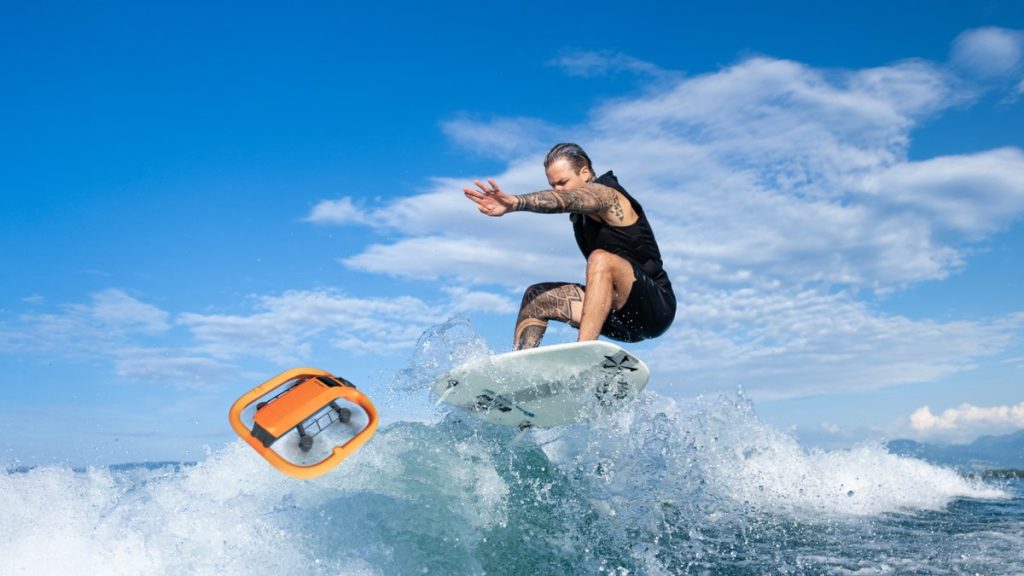
The HoverAir X1 is a self-flying pocket camera that launches from your hand and follows you through pre-set flight modes, no remote or piloting skills required. Folded down it is about the size of a phone and weighs roughly 4.4 oz with the battery, which keeps it under the 250g threshold that exempts it from a lot of drone regulation. The enclosed propeller frame makes it safe to grab out of the air, and the two-button controls mean anyone can get a tracking shot on their first try.
The trade-off is that it is a lifestyle camera first and a drone second. Battery life is short, wind resistance is limited, and the base X1 tops out at 2.7K video rather than 4K. If you want long-range flying or manual control, a traditional drone makes more sense. But for effortless follow-me clips on a hike, a bike ride, or in the backyard, the X1 does something most drones cannot.
What we liked
- Launches from your palm with no remote or piloting skills
- Folds to phone size and slips into a jacket pocket
- Enclosed propellers are safe around people and indoors
- Stays under 250g, which reduces regulatory hassle
- Autonomous flight modes make solid tracking shots easy
What we didn't
- Short battery life limits each session to a few minutes
- Weak wind resistance compared with full-size drones
- Base model caps out at 2.7K video, not 4K
Our ratings
What is HoverAir X1?
The HoverAir X1 is a self-flying pocket camera built by Zero Zero Robotics. Instead of a joystick and a screen, you unfold it, place it on your palm, tap a button to choose a flight mode, and let it lift off on its own. It then follows a pre-programmed path, tracks you, and lands back in your hand when it is done. The whole idea is to remove the piloting from aerial video so that anyone can get a clean tracking shot.
Physically it is tiny. Folded, it is roughly the size of a smartphone, and it weighs about 4.4 oz (125g) with the battery installed. That weight matters because it keeps the base model under the 250g line, which in many places means far less paperwork and fewer flight restrictions. The propellers sit inside a protective frame, so you can pluck it out of the air without slicing a finger, and it is safe to fly close to people or even indoors.
How it performs
Where the X1 shines is convenience. The palm launch works reliably, the autonomous modes such as follow, orbit, and zoom-out are genuinely useful, and the footage looks good in daylight. For hikes, skate sessions, backyard clips, and travel B-roll, it delivers the kind of dynamic shots that used to require a full drone rig and some practice.
The base model records up to 2.7K video with 1080p at higher frame rates, and stores clips on 32GB of internal memory. That is plenty for social video and casual editing. Reviewers consistently call it the flying camera they actually reach for, precisely because it is always ready and never intimidating.
- Palm launch and landing that work on the first try
- Useful autonomous modes for follow and orbit shots
- Solid daytime image quality for social and travel clips
The honest downsides
The X1 is a lifestyle camera before it is a serious drone, and that shows in the flight envelope. Battery life is short, so each session lasts only a few minutes before you swap packs, which is why the combo kit with a second battery and charging hub is worth the small upcharge. Wind resistance is limited too. In gusty conditions it can struggle where a heavier drone like a DJI Mini would hold steady.
It also does not offer manual piloting on the base experience, so if your goal is to learn to fly a drone or push into long-range work, this is the wrong tool. Competitors like the DJI Neo give you a wider range and more room to grow as a pilot, even if they are less pocketable. And the base X1 tops out at 2.7K rather than 4K, so demanding creators may want to look at the Pro or ProMax tiers.
Is it worth it?
For the right buyer, yes. If you want effortless follow-me footage and you value something that fits in a jacket pocket and launches from your hand, the HoverAir X1 is one of the easiest and most fun cameras you can buy. It removes the friction that keeps most people from ever getting good aerial shots.
If instead you want long flights, strong wind handling, or the ability to fly manually and improve as a pilot, put your money toward a traditional drone. Buy the X1 for what it is: a clever, portable, hands-free camera that nails casual tracking shots. Judged on that promise, it earns a solid recommendation, and the combo kit is the version most people should get.
Quick specs
- Category
- Self-flying pocket camera
- Price
- $349 device, $399 combo
- Weight
- About 4.4 oz (125g) with battery
- Video
- 2.7K at 30fps, 1080p at 60fps (base X1)
- Notable
- Palm launch, enclosed props, 32GB internal storage